How Phil Southerland Broke the 3-Hour Marathon Barrier
02 April 2026
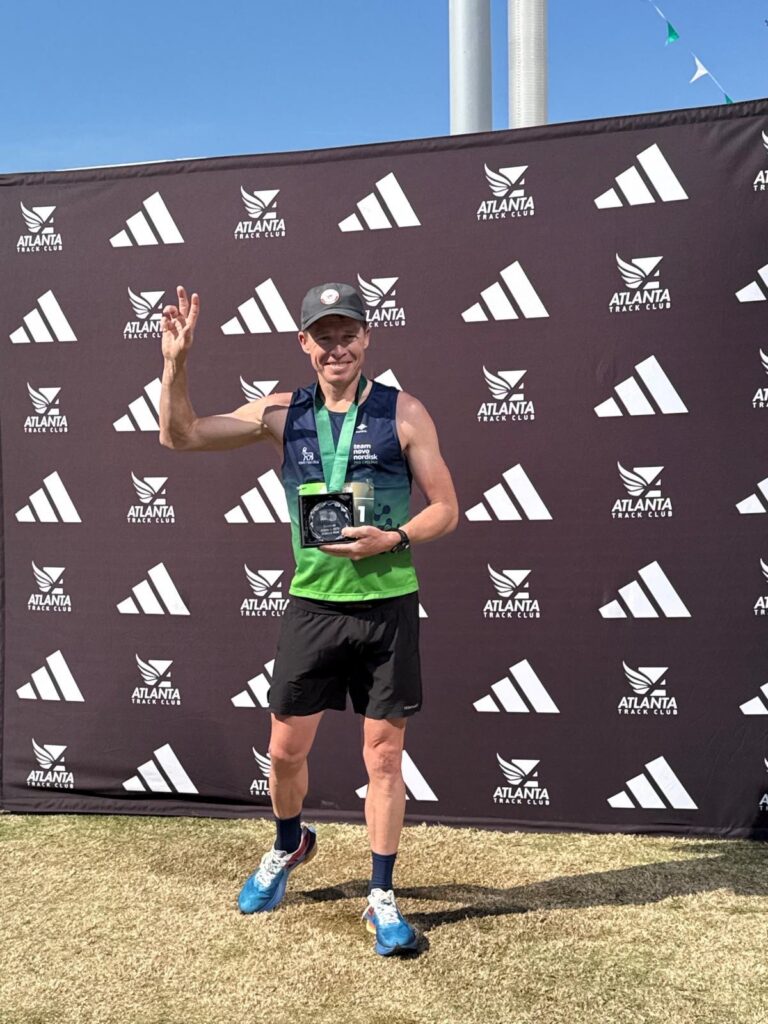
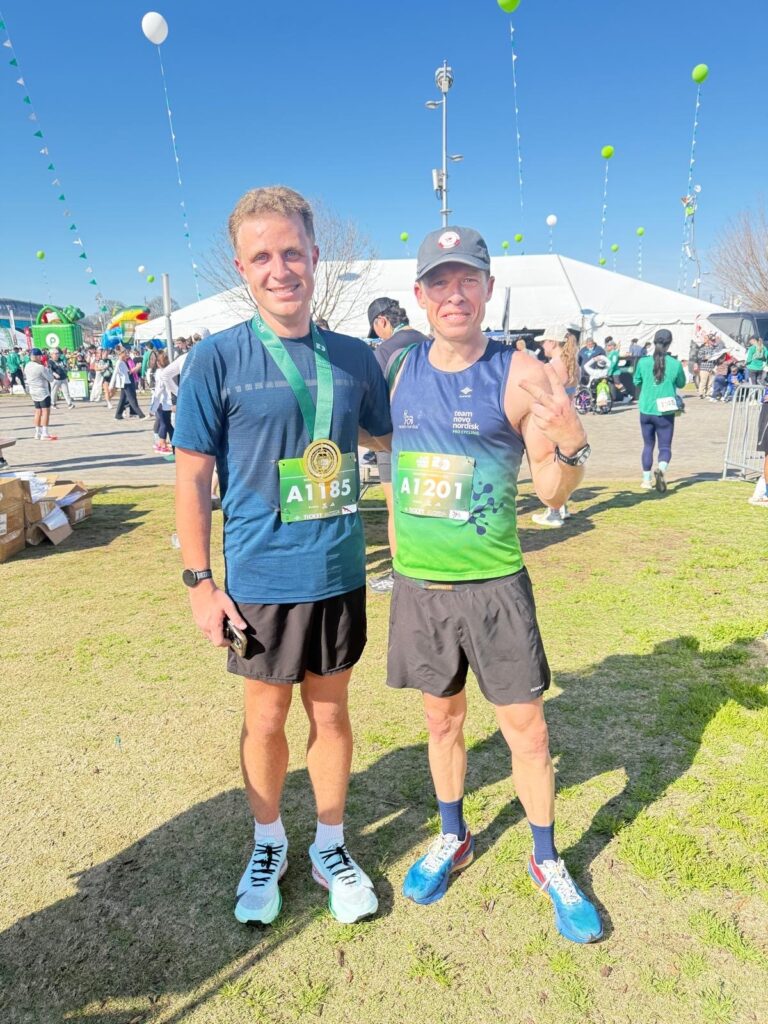
For many runners, the sub-3-hour marathon is the “holy grail”, a testament to speed, grit, and meticulous planning. For Team Novo Nordisk CEO and Co-Founder Phil Southerland, who has lived with type 1 diabetes for 44 years, crossing the finish line at the Atlanta Marathon in 2:56:29 wasn’t just a personal best; it was a masterclass in balancing high-performance sport with diabetes management.
Despite the grueling, hilly Atlanta course, Phil took home a first-place finish in the Masters category and placed 22nd overall. Here is how he did it, and the lessons he wants every person living with diabetes to take away from his journey.
Finding the “Bike-Run” Balance
Just two weeks prior, he completed a 50K ultramarathon, finishing third.
Phil built his endurance base through cycling and “recovery work” on the bike, while saving his high-intensity efforts for the run. This allowed him to build the necessary engine without the high impact that often leads to injury.
“I started doing yoga a week before the marathon,” Phil joked, but the impact was real. “It taught me to breathe through the good feelings early in the race to avoid starting too fast, a mistake that often leads to paying the price in the final miles.”
Fueling and Glucose Management: The “Math Equation”
Diabetes management during a marathon is often described as a moving target. For Phil, it was a math equation he solved in real-time.
| Phase | Glucose Level / Strategy | Nutrition / Insulin |
| Pre-Race (4:45 AM) | 150 mg/dL (after correction) | Granola, blueberries, half a banana, and yogurt. |
| Race Start | ~150 mg/dL | Small Red Bull (sugar + caffeine boost). |
| Hour 1 | ~230 mg/dL (Steady) | Two Maurten 100 gels + one Maurten 160 gel. |
| Hour 2 | ~202 mg/dL (Steady) | Two Maurten 100 gels + one Maurten 160 gel. |
| The “Wall” (Mile 18-22) | Nausea / Nearing 190 mg/dL | One Maurten 100 (after overcoming nausea). |
| Finish Line | 190 mg/dL | insulin + chocolate milk & yogurt. |
“I carried eight gels. I had my first-hour gels on the left, second-hour in the middle, and third-hour on the right. I ended up with two extra. If I needed them and didn’t have them, it would have been a disaster.”
Turning Challenges into “Superpowers”
Phil is the first to admit that even after four decades, diabetes still throws curveballs. During his 50K two weeks prior, he “cracked” when his sugar hit 120 mg/dL – a normal number for most, but too low for that level of intensity. He used that failure to fuel a better strategy for Atlanta.
Phil’s advice is simple: Pack more than you think you need. Carrying an extra 100 grams of weight in gels is a small price to pay for the security of knowing you won’t bonk.
While other runners “hit the wall” at three hours because they don’t know why they are fading, athletes with diabetes have a literal window into their metabolism via their sensors.
- Use the data: Let the knowledge of your glucose levels be your “superpower.” It allows you to be the best-fueled athlete on the course.
- “Come race day, you’re your own doctor. There’s no one there telling you what to do,” Phil says. Work with your healthcare team during training, but trust your experience when the gun goes off.
A Message for the Community
Whether your goal is a five-hour marathon or a walk around the block, Phil’s message remains the same: Don’t let diabetes bring you down; let it supercharge you.
“If you screw it up, there’s always another race next year. You never stop learning, and you never stop making mistakes. That’s been the one consistent thing in my 44 years with this disease. Just go out there and have fun.”
Inspired by Phil’s journey? Follow Team Novo Nordisk for more stories of athletes defying the odds and showing the world what’s possible with diabetes.